 Image 1 of 5
 Image 2 of 5
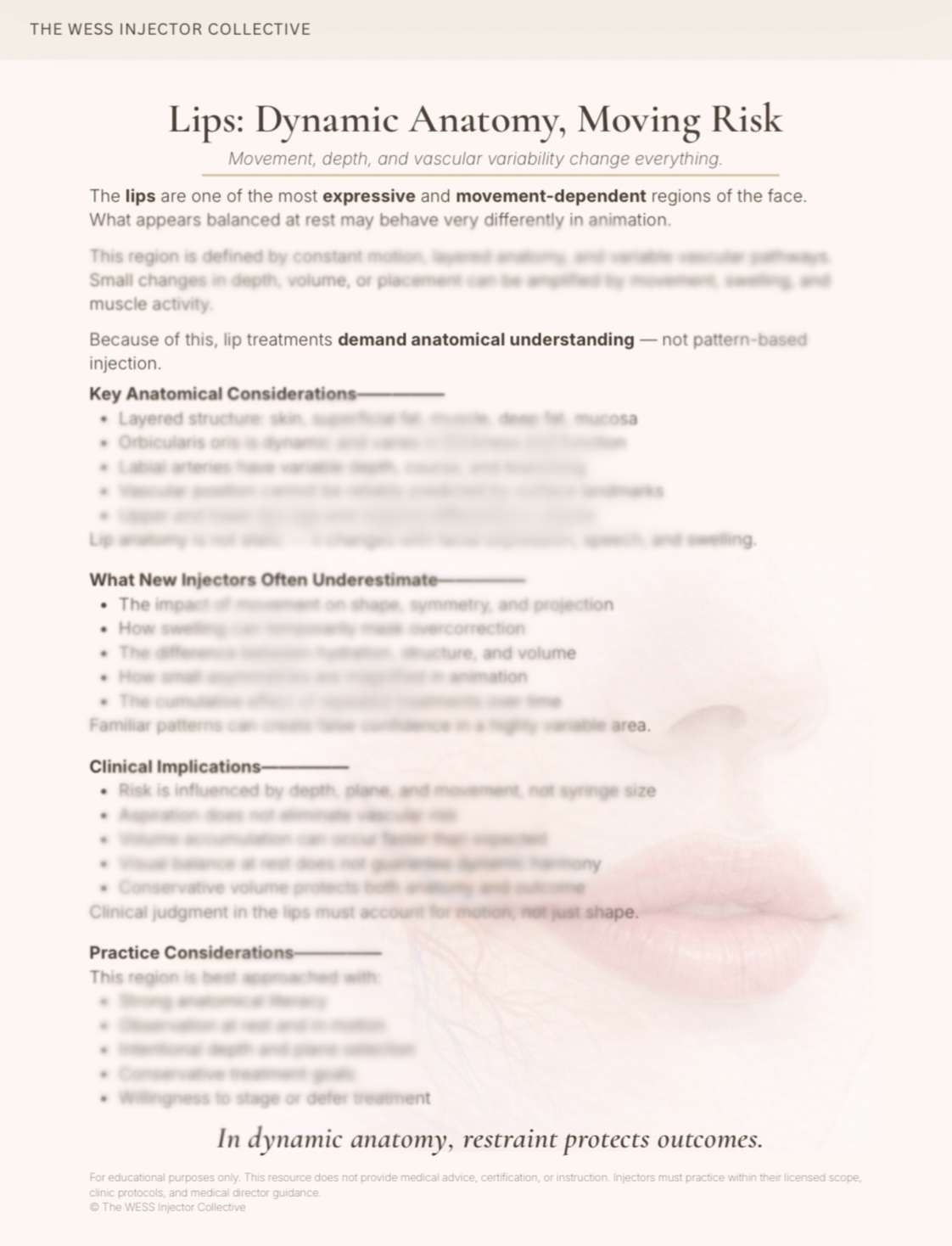 Image 3 of 5
 Image 4 of 5
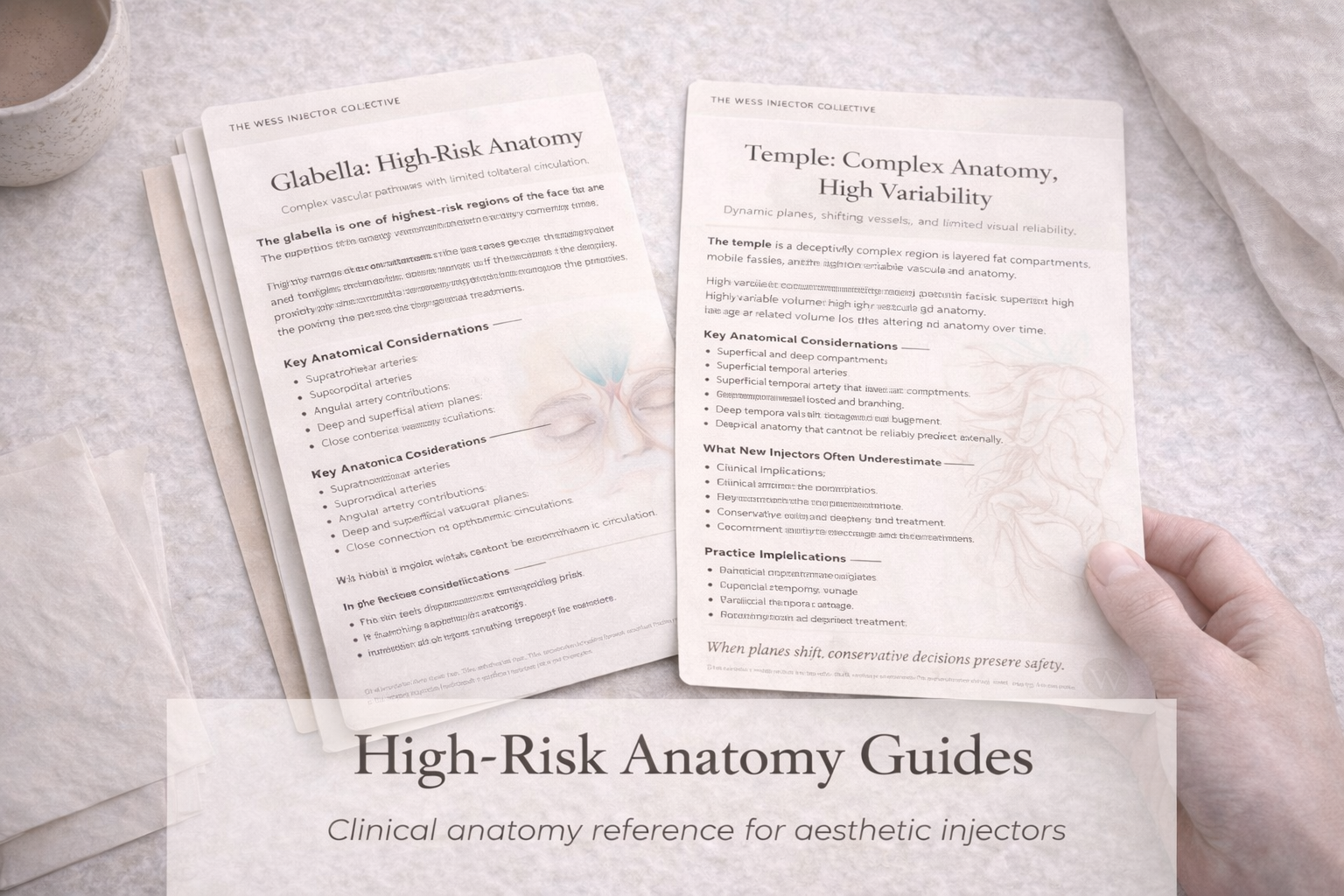 Image 5 of 5
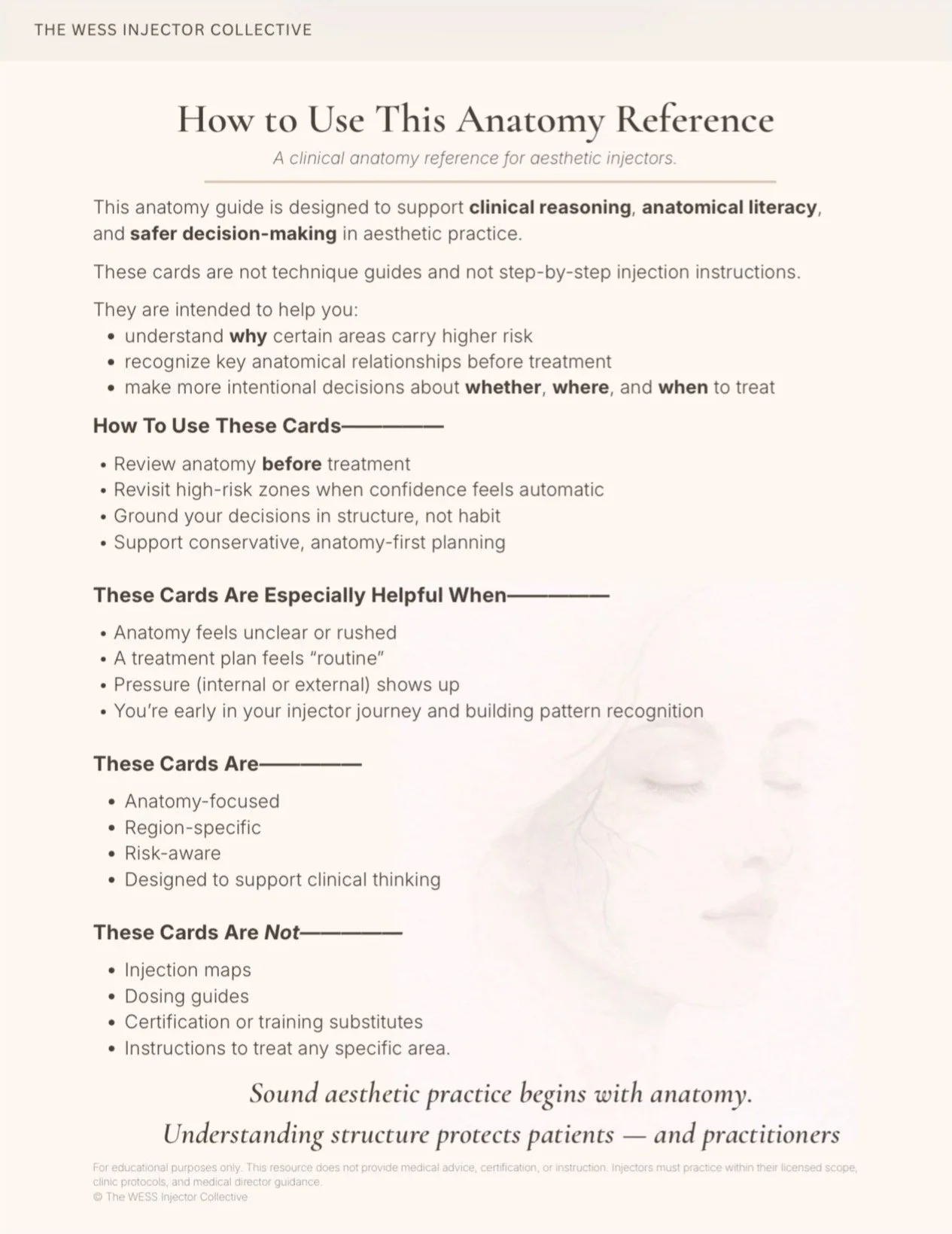
This Clinical Anatomy Guide was created to support clinical reasoning, anatomical literacy, and safer decision-making in aesthetic medicine.
Rather than providing injection techniques or step-by-step instructions, this guide focuses on why anatomy matters, where risk concentrates, and how structural, vascular, and dynamic anatomy influence outcomes across the face.
Each section reflects lessons learned through time, repetition, reassessment, and patient outcomes — allowing newer injectors to benefit from anatomical insights that are often only gained gradually through experience.
This resource is designed to slow pattern-based treating, reinforce anatomy-first thinking, and support thoughtful, intentional care.
What’s Included (In Order)
This guide walks through high-impact facial regions in a deliberate clinical sequence:
Glabella – High-risk vascular anatomy and limited collateral circulation
Temple – Layered anatomy, shifting vessels, and high variability
Midface – Structural support, depth relationships, and downstream effects
Tear Trough – Thin tissue, optical sensitivity, and limited margin for error
Nasolabial Fold – Why the fold is often a signal, not the source
Lips – Dynamic anatomy, movement-dependent risk, and vascular variability
Chin & Lower Face – Structural support, movement, and neurovascular considerations
Global Vascular Awareness – Pattern recognition, reassessment, and escalation over panic
Each region includes:
Key anatomical considerations
Common areas new injectors underestimate
Clinical implications that affect decision-making
Practice considerations grounded in anatomy — not routine
What This Guide Helps You Do
Strengthen anatomical literacy across high-risk facial regions
Understand why certain areas behave unpredictably
Recognize where confidence can outpace anatomy
Make more intentional decisions about whether, where, and when to treat
Reinforce conservative, anatomy-first planning
Especially Helpful If:
Anatomy sometimes feels unclear or rushed
Treatment plans begin to feel automatic
You’re early in your injector journey and building pattern recognition
You want to reinforce anatomy-first thinking alongside your training
This Guide Is:
Anatomy-focused
Region-specific
Risk-aware
Designed to support clinical thinking
This Guide Is Not:
Injection maps
Dosing guides
Certification or training replacement
Step-by-step treatment instruction
This resource complements formal training and clinical protocols — it does not replace them.
Format
Digital PDF
Instant download
Designed for on-screen reference or optional printing